With the changing scenario in the industry, materials are supposed to provide strength, durability, sustainability, and cost-effectiveness in terms of usage. Here comes the role of Glass Fiber, which has become one of the best solutions for manufacturers in various industrial sectors, ranging from constructions to automobiles, marine to electricity, and more.
Its exceptional strength-to-weight ratio, corrosion resistance, and versatility, Glass Fiber has become one of the most preferred reinforcement materials among different industries. As firms aim at producing quality products that can offer longevity, Glass Fiber has become highly sought after in different parts of the world.
Glass Fiber is a high-performance reinforcement material made from extremely fine strands of glass. It is widely used in composite materials to improve mechanical strength, durability, crack resistance, and structural stability. Available in various forms such as E-Glass Fiber, AR Glass Fiber, chopped strands, and woven roving, it can be customized for various industrial applications.
One of the key benefits offered by Glass Fiber is the exceptional strength combined with lightweight properties, which make it substantially less dense than other metals, such as steel.
The ability of the material to provide increased tensile strength and be substantially lighter provides significant opportunities for industries such as transportation, aviation, or construction.
While other materials tend to wear out over time because of corrosion or exposure to harsh weather conditions, Glass Fiber Reinforced Materials have excellent resistance to water, chemicals, and any external factors that can cause deterioration of the material.
Some potential applications include:
The use of Glass Fiber ensures improved longevity of constructions and equipment.
More and more construction businesses are choosing to incorporate Glass Fiber Reinforced Polymer (GFRP) and Glass Fiber Reinforced Concrete (GRC) technologies into their work processes.
Glass Fiber provides enhanced protection against cracking, high load, and improves the overall performance of the constructions.
Moreover, due to being non-conductive, Glass Fiber is also popular for use in insulating equipment, laminates, transformer parts, and electronic devices.
The development towards smart technology and electricity requires good quality materials that can be used as effective insulators.
Due to sustainability becoming an essential part of modern industrial activities, the properties of Glass Fiber have proven to be effective for such purposes.
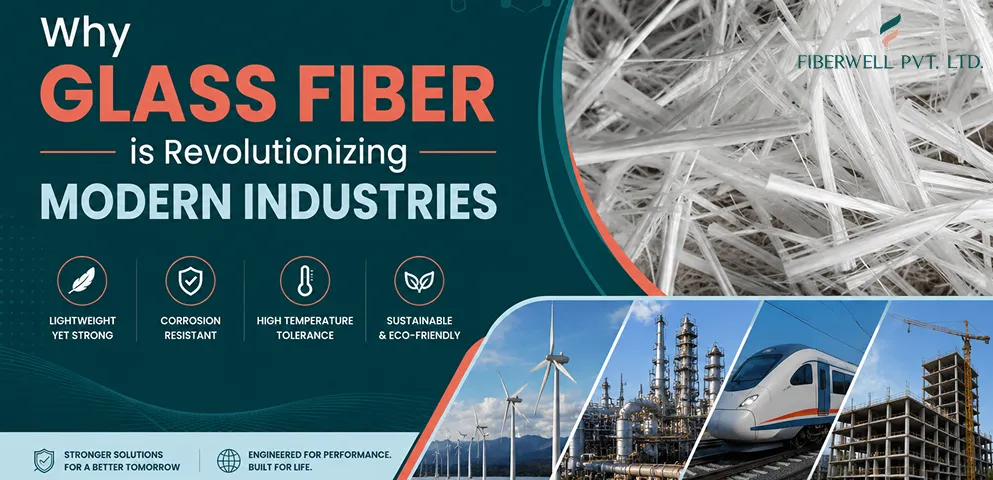
Glass Fiber Composites are being used widely in the production of renewable energy devices, which includes wind turbine blades.
The versatility of Glass Fiber has enabled its adoption across numerous sectors:
Its ability to deliver strength, durability, and design flexibility continues to drive innovation across these industries.
With time, there will be increasing importance placed on the need for high-performance, sustainable, and cost-effective solutions within various industries. As such, the use of Glass Fiber is set to increase alongside advancements in composite technologies, infrastructure, and renewable energy production.
Today, Glass Fiber is not just an alternative material but a crucial ingredient that makes up the core of any advanced industrial process or project.
The increased need for highly resilient, lightweight, and durable materials is making Glass Fiber one of the most important innovations in the manufacturing and construction sectors today. With great mechanical strength, corrosion resistance, electrical insulation, and durability, Glass Fiber remains a highly effective solution.
Get premium Glass Fiber, E-Glass Fiber, AR Glass Fiber, and other reinforcement solutions from Fiberwell India’s extensive range of products.