At Fiberwell, we stand as a reliable Micro Fiber Manufacturer, Supplier and Exporter. It is purely engineered to offer superior plastic shrinkage crack control and settlement crack resistance in fresh concrete. It is designed for modern construction demands, our microfibers plays a vital role in enhancing the durability and integrity of concrete structures.
Our Micro Fibers are introduced into the mix at optimized low dosages, making sure it provides uniform dispersion throughout the concrete matrix. This created a profound three-dimensional fiber network that effectively lowers internal stress during the early stages of curing parallelly it also reduces the risk of surface cracking, shrinkage cracks and micro fissures as the concrete sets.
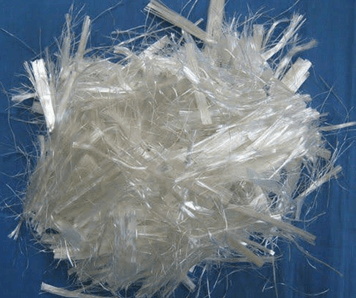
Our microfibers has two advanced configurations:
Monofilament Micro Fibers: It is fine, single-strand fibers designed for consistent distribution and effective crack control.
Fibrillated Micro Fibers (Basically known as Mesh Type): It is engineered to open into a mesh-like structure during mixing, increasing surface contact area and improving bonding within the cementations matrix for enhanced performance.
Our Micro Fiber solutions are broadly used across diverse application such as residential construction, commercial projects, and precast concrete, and large-scale infrastructure developments. With profound global presence, we export premium quality of concrete microfibers to international markets such as the UAE, Malaysia, Europe, and Egypt along with other regions worldwide.
By opting our polypropylene microfibers for concrete to gain enhanced tolerance towards crack, improved durability, and reduced permeability, and prolonged structural performance making them an crucial component for high-quality, resilient concrete construction.
Controls plastic shrinkage cracking in the first 24 hours after pouring.
Reduces plastic settlement cracking around rebar and embedded items.
Monofilament and fibrillated types available depending on application.
Chemically inert in concrete's alkaline environment.
Does not affect compressive strength or other mechanical properties at standard dosages.
Improves fire spalling resistance in high-temperature exposure conditions.
Compatible with all cement types and standard concrete admixtures.
| Property | Value |
|---|---|
| Material | Polypropylene |
| Fiber Length | 6mm / 12mm |
| Diameter | 18 – 40 microns |
| Density | 0.91 g/cm3 |
| Melting Point | ~160°C |
| Tensile Strength | 350 – 600 MPa |
| Dosage | 600g – 1kg per m3 of concrete |
Typical dosage ranges from 0.6 to 1.0 kg per cubic metre of concrete. Higher dosages goes up to 1.5 kg/m³ are used in thin sections or high-risk plastic shrinkage conditions like hot, dry, or windy weather.
Dosage should be confirmed based on concrete mix design, environmental conditions at pour, and project specification.
They available in 200g, 600g, and 900g unit dose bags, and in bulk bags for large site use.
The unit dose format permits easy on-site dosing without weighing.
Advisable to Store in a dry, covered area away from direct sunlight.
Shelf life is of 36 months when stored correctly.
Non-toxic and non-irritating under normal use conditions. Standard site PPE is sufficient.
Avoid inhalation of fiber dust in enclosed spaces use a dust mask if cutting or handling large quantities in confined areas.